Neptune's Empery
A Hymn in Praise of Neptune - Thomas Campion
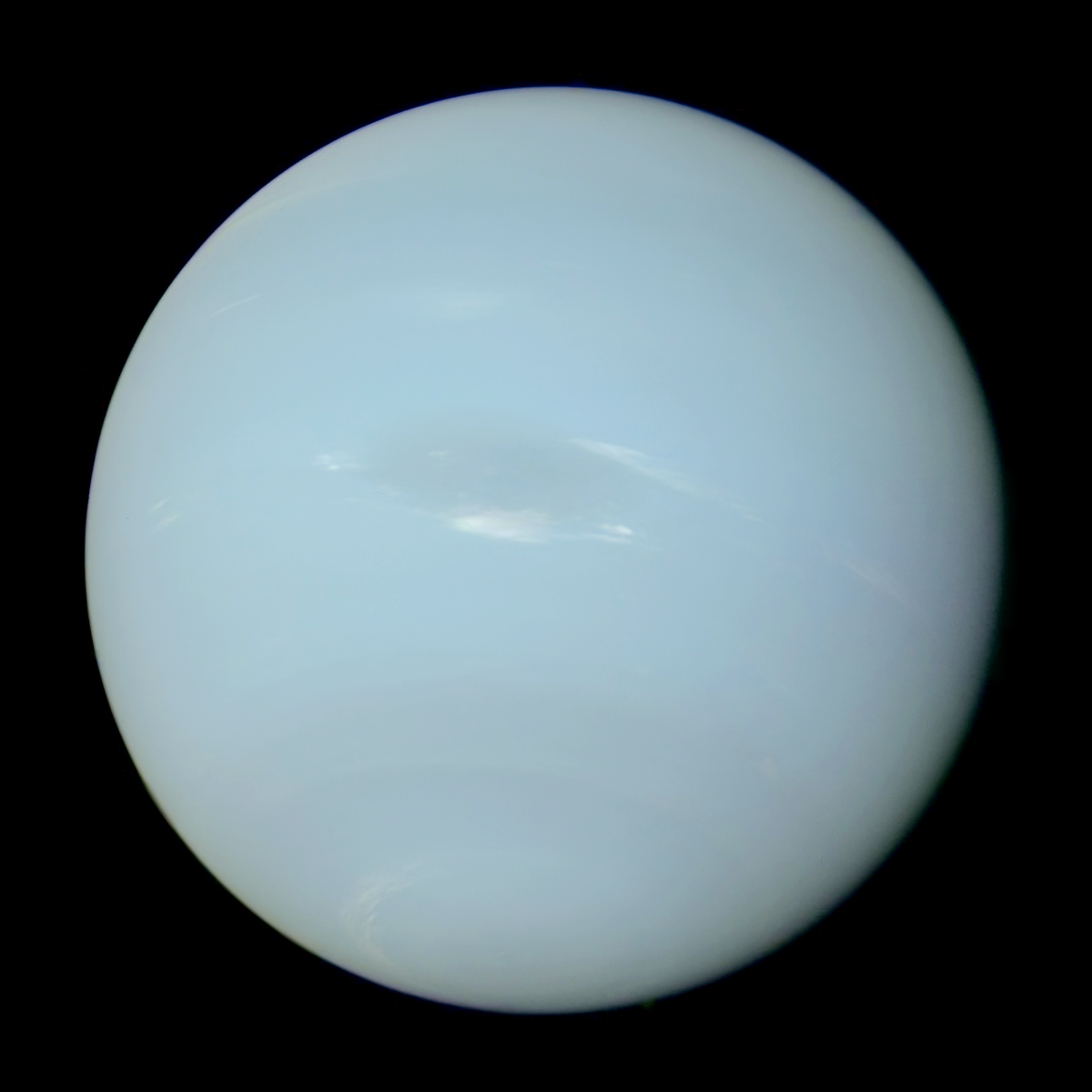
NASA / Voyager 2 / PDS / OPUS / Ardenau4, CC0, via Wikimedia Commons
Of Neptune's empire let us sing,
At whose command the waves obey;
To whom the rivers tribute pay,
Down the high mountains sliding:
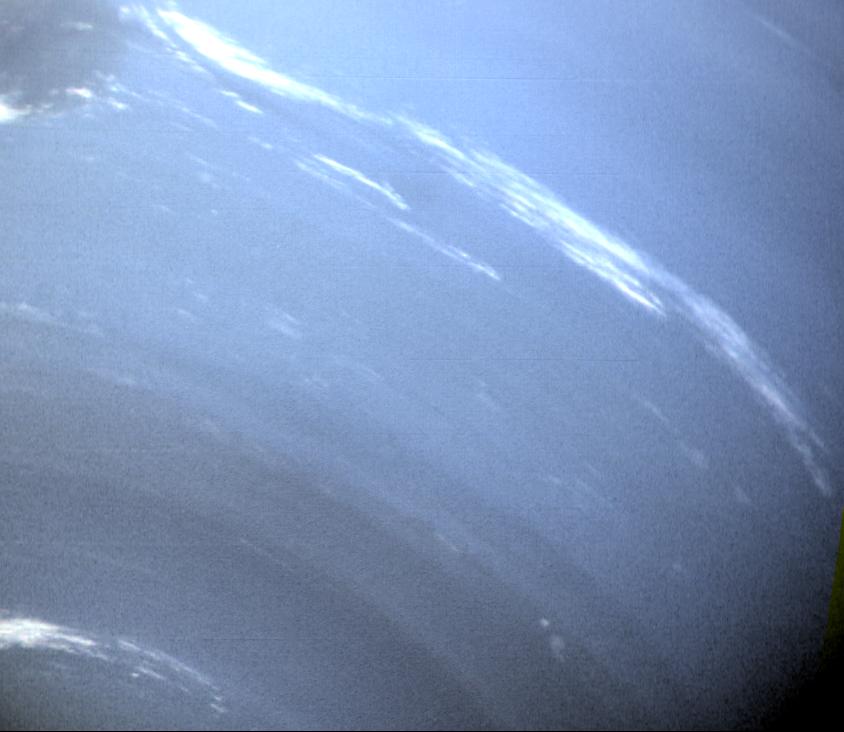
Voyager 2 photo of clouds on Neptune, adjusted for true color. Credits: NASA/JPL
To whom the scaly nation yields
Homage for the crystal fields
Wherein they dwell:
And every sea-dog1 pays a gem
Yearly out of his wat'ry cell
To deck great Neptune's diadem2.
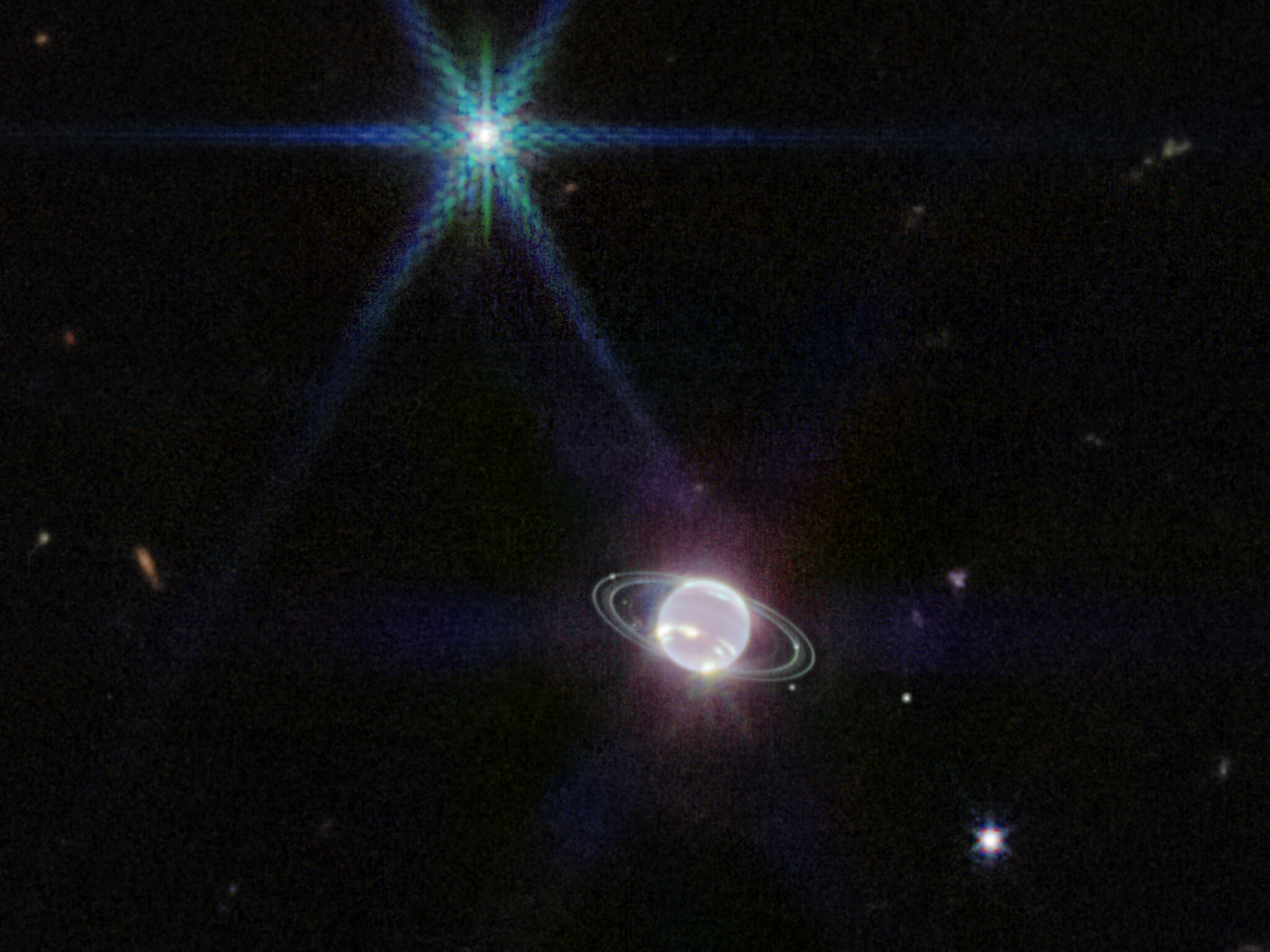
James Webb Space Telescope Near-Infrared Camera (NIRCam) photo of Neptune. Neptune's moon Triton is visible as the blue 'star' upper left. Smaller moons are also visible. Credit: NASA, ESA, CSA, and STScI
The Tritons dancing in a ring
Before his palace gates do make
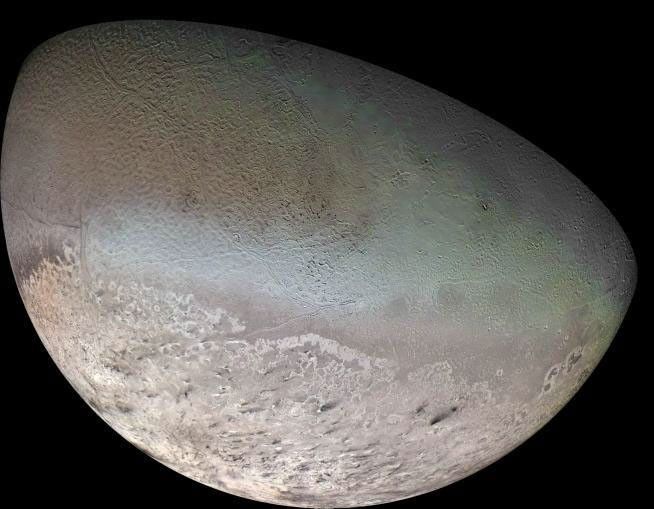
Global color mosaic of Triton, taken in 1989 by Voyager 2 during its flyby of the Neptune system. Credit: NASA/JPL/USGS
The water with their echoes quake,
Like the great thunder sounding:
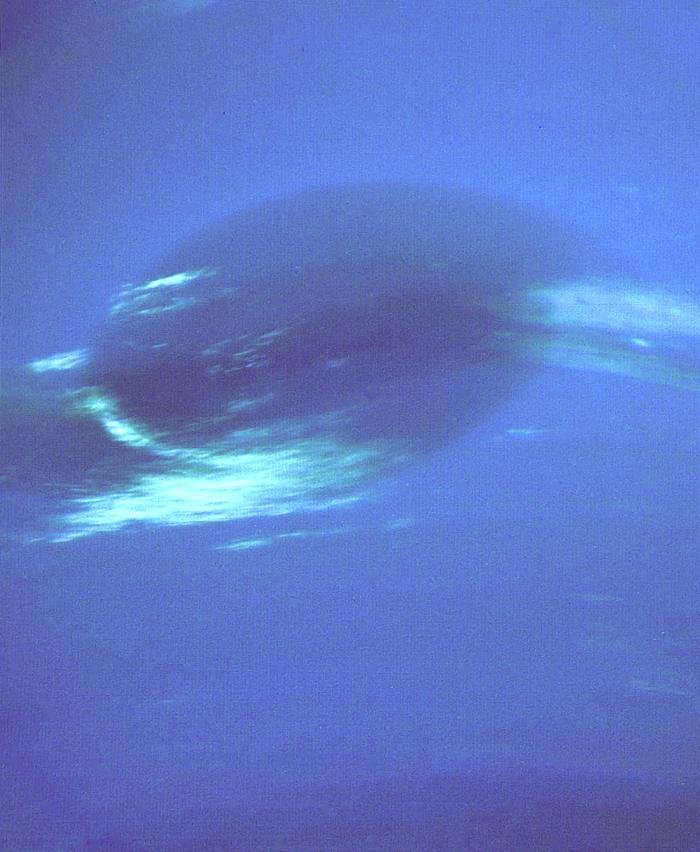
Neptune's Great Dark Spot. Credit: NASA/JPL
The sea-nymphs chant their accents shrill,
And the sirens, taught to kill
With their sweet voice,
Make ev'ry echoing rock reply3
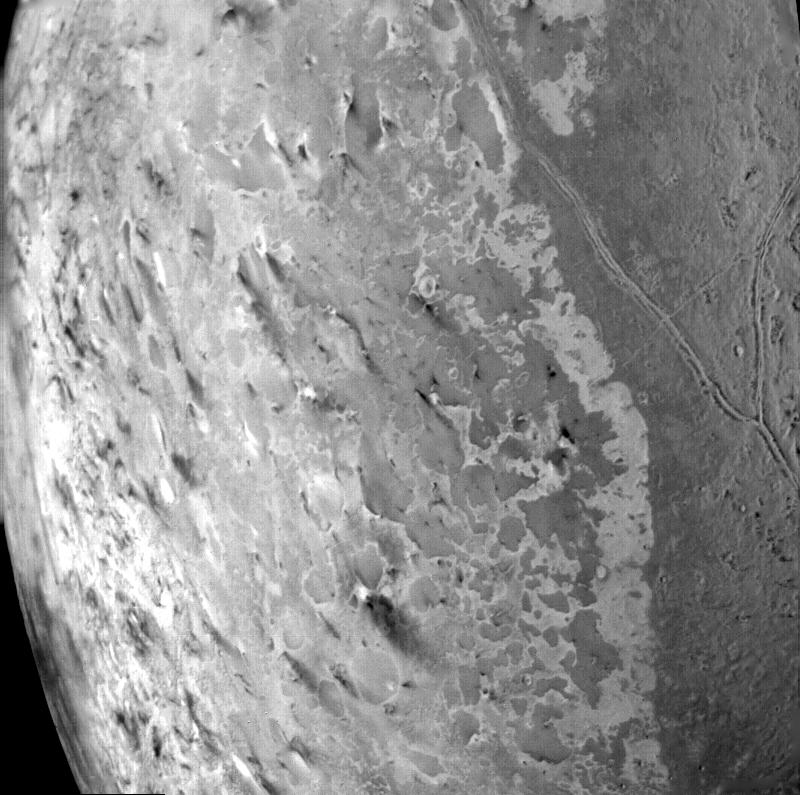
Cryovolcanoes of Triton (see dark streaks!). Credit: NASA/JPL
Unto their gentle murmuring noise
The praise of Neptune's empery4.
Backstory
In my hunt for nice poems I stumbled upon Thomas Campion’s A Hymn in Praise of Neptune while flipping through The Oxford Book of English Verse, 1250-1900: Enriched Edition. I couldn’t help but close my eyes after reading and instead of thinking of grand ocean voyages or swashbuckling buccaneers I thought of those “blue empires” beyond Earth. I attribute part of this chain of thought from reading Ada Limón's beautiful poem In Praise of Mystery: A Poem for Europa.
Uranus also came to my mind, its uncanny pale hue and enormity just sitting in the vastness of space. I thought of what I’d read about Enceladus and Europa, icy marbles with oceans tucked away from the eyes of man. And I thought even further than our Solar System, to the news of watery exoplanets5 and the tantalizing dream that life beyond what we know it to be could exist in those dark depths.
Perhaps we will get the chance to see life like that of the Ediacaran or Cambrian Periods on Earth: Sponges and Kimberella abounding, the delightful-looking Anomalocaris, Opabinia, and Hallucigenia wandering about6, a snapshot of our origins just waiting to be discovered!
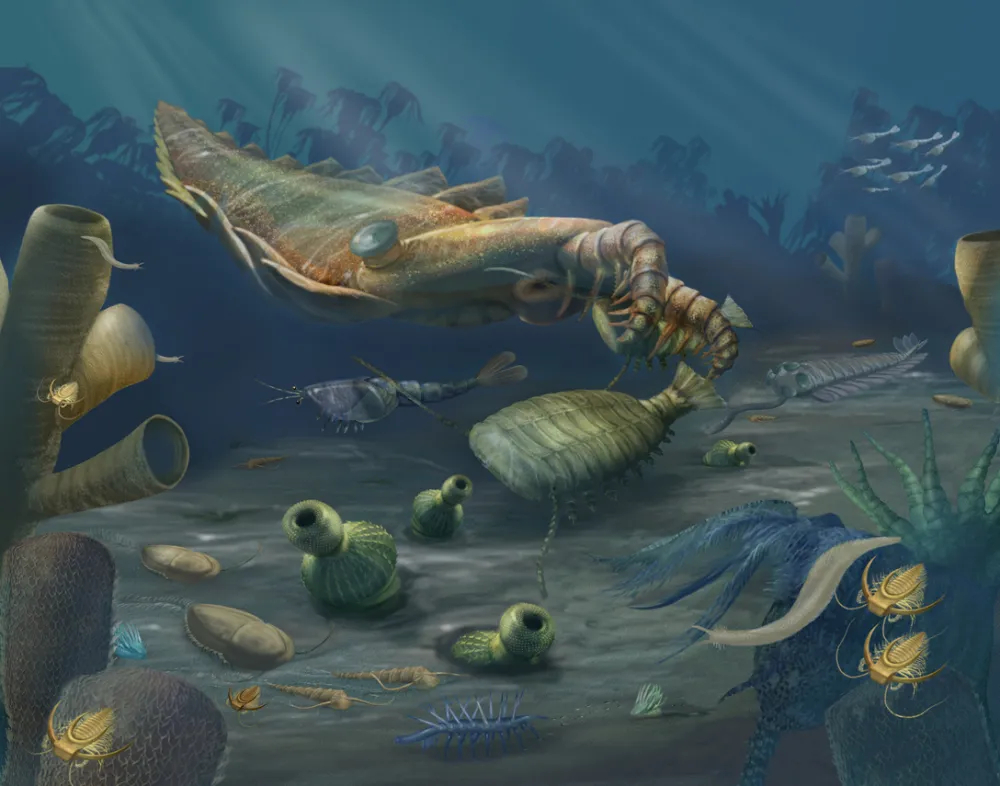
Anomalocaris depicted swimming above, with Hallucigenia (the spiky fellow) center bottom. Credit: Smithsonian Institution
Or perhaps there is only a sad soup of organic compounds. Just salt, minerals, ice and the of the finitude of our being rendered naked against the cosmos.
Either way, I dream and dream onwards! I let every word of a good poem take me to worlds within and horizons beyond ✨
If you'd like to leave a comment or have a suggestion/concern, please feel free to reach out to me via my e-mail at: (my first name)z(first letter of my last name).dev@gmail.com
Veteran sailor - Merriam-Webster
Crown - Merriam-Webster
The Original NASA image caption does not use the term "cryovolcano" but this BBC Sky at Night Magazine article uses the same image with the term "cryovolcanism". I have elected to use that term in this image caption as it feels more closely tied to the words "shrill" and "echoing rock" in the poem (things I would associate with a normal volcano!).
Wide dominion - Merriam-Webster
I note here that it seems the majority of news about water on exoplanets usually indicates the water is in a state that is not conducive to the formation/hosting of life but that being said, it isn't a huge stretch of the imagination to imagine a world out there where the water is a bit milder :P. See this NASA post and this Space.com post.
Kudos to Danna Staaf's Monarchs of the Sea: The Extraordinary 500-Million-Year History of Cephalopods for introducing me to the Ediacaran period as well as Kimberella, I consulted the book in helping compose this sentence.